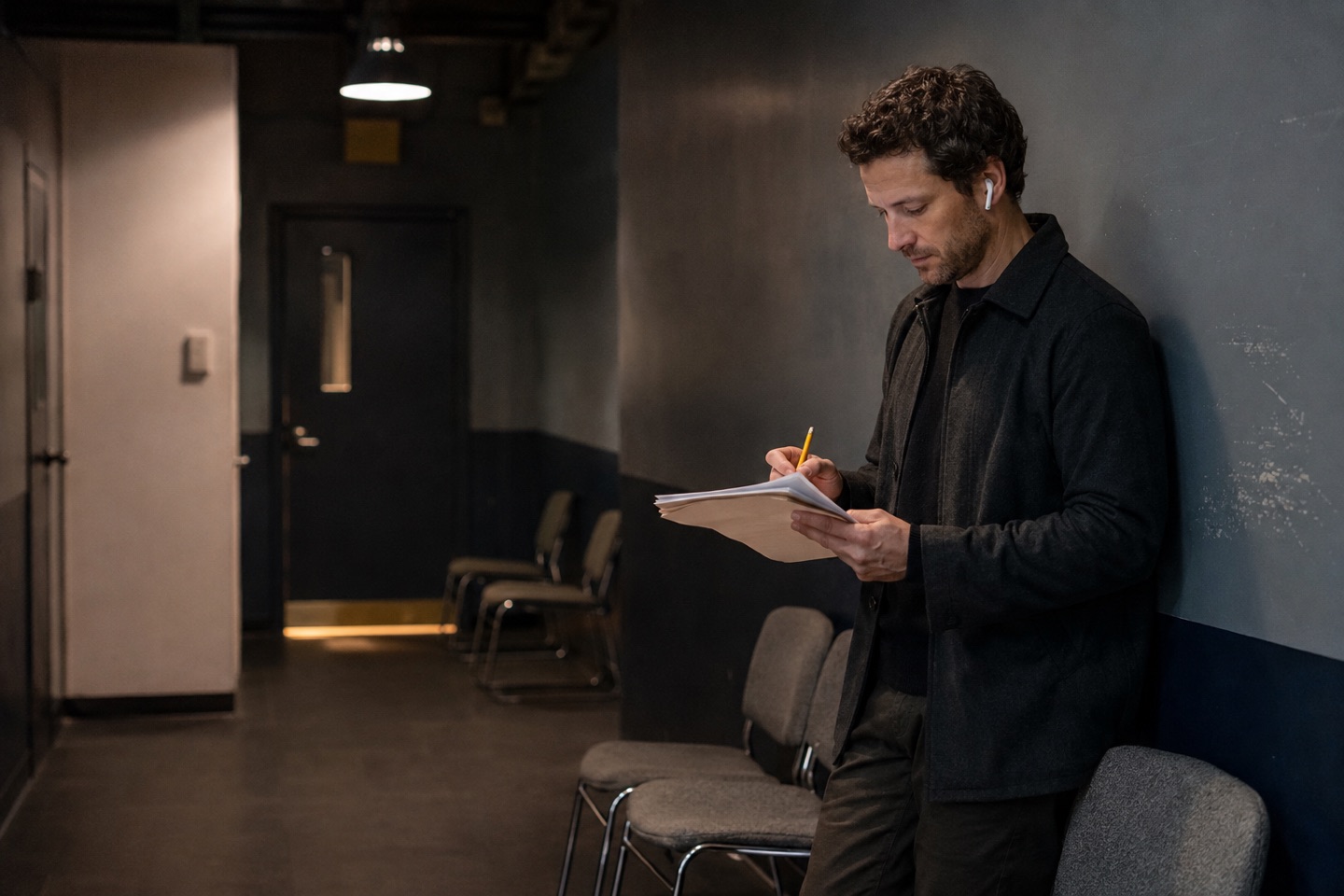
Begin with what changed
Do not assume the callback pages are identical. Compare scene start, cuts, line changes and any new character information before repeating the version already in your body.
Mark changes visibly and learn the new cue with the new response as one unit.
A callback rehearsal sequence
The sequence protects preparation while making room for direction.
- Facts run: confirm new pages, events and cues.
- Foundation run: perform the scene once using the choice that earned the return.
- Adjustment run: change only the requested action, relationship or pace.
- Recovery run: start from the middle after a deliberate interruption.
- Final run: choose a clear version and complete it without self-correction.
Example: revised sides with a colder direction
Import or rescan the revised PDF and confirm the scene split. Run the original once. For the adjustment, keep the objective and facts but remove the effort to win approval. Listen for how that changes the response to each opposite line.
If everything changes at once, narrow the note. The casting team needs to see that you can receive direction, not that you can replace one polished performance with another.
Avoid guessing what the room wants
The app can help you make the requested adjustment concrete and repeatable. It cannot predict taste or casting decisions. Prepare contrasting playable options, then meet the actual direction in the room.
Try the workflow in Action!
Put another voice in the scene
Import a PDF, review the detected scenes and roles, then choose your character. Say your lines aloud while Action reads the other parts. Action is free to download. Eligible new subscribers can try Action Pro or Ultra free for three days. Apple shows the current offer before you subscribe.
Download Action on the App StoreApple shows the current trial offer and regional price before you subscribe.