Give each session one measurable job
Solo work becomes vague when the goal is simply to act. Choose a task you can observe: cleaner cue pickup, clearer consonants, more available eyeline or a stronger change at the scene turn.
Stop before repetition becomes automatic. A focused twenty minutes is more useful than an hour spent polishing the version you already know.
A five-day home practice rotation
- Day one: observe a real behaviour, then reproduce its rhythm without caricature.
- Day two: cold read unfamiliar pages and keep your eyes available at the end of each thought.
- Day three: use spoken opposite lines and answer only after the cue changes you.
- Day four: work breath, articulation and pace on neutral text.
- Day five: record one complete scene, review once and choose a single adjustment.
Set up a room that supports the work
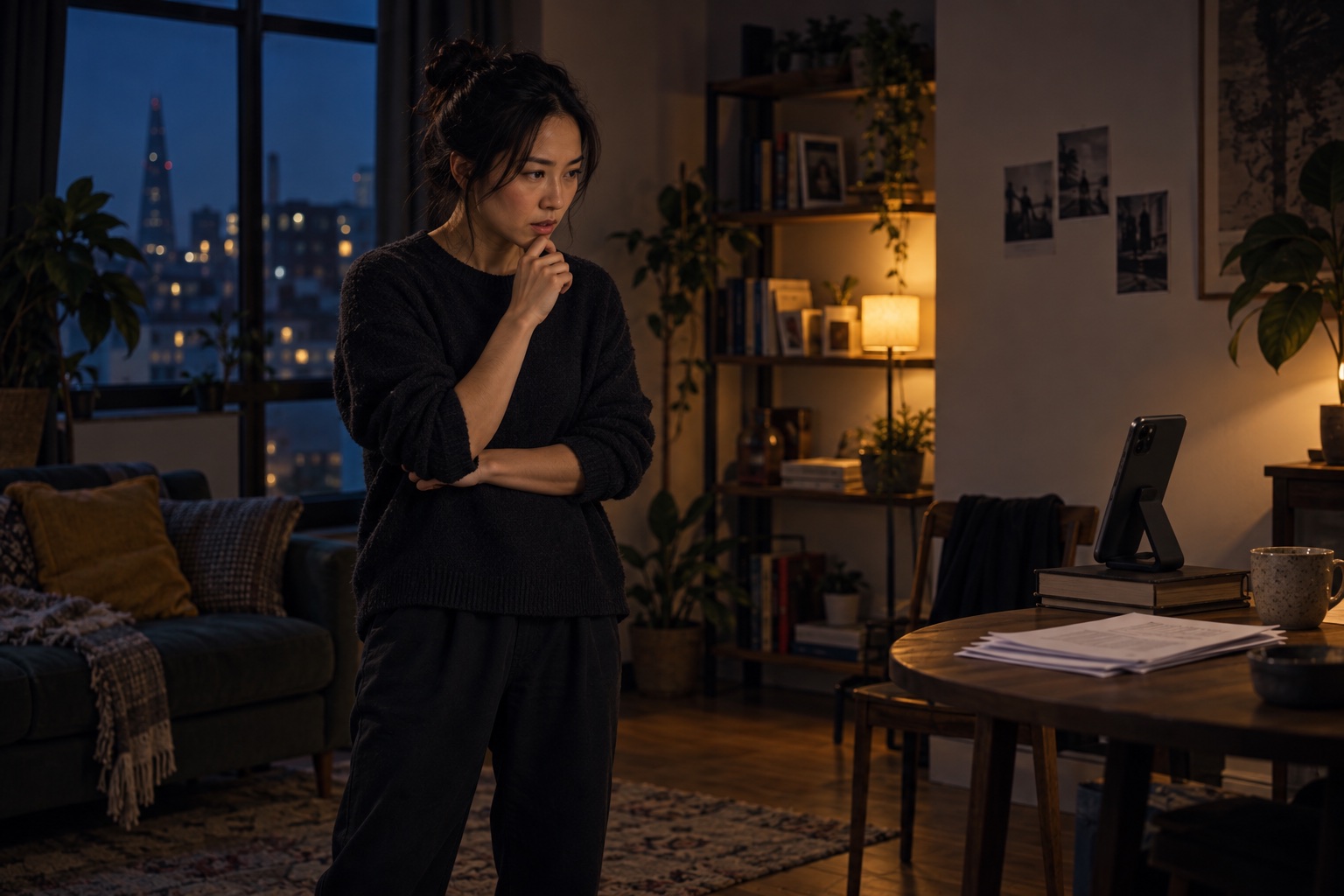
You need enough clear floor to stand and move, a stable place for the phone and sound quiet enough for spoken cues. Put the device close to the imagined partner's eyeline rather than below your face.
Keep props minimal unless handling the object is part of the scene problem. A cluttered setup can turn preparation into production design.
Know what home practice cannot supply
Solo work can strengthen preparation, recall and self-observation. It cannot reproduce another actor's unpredictability, a teacher's context or a director's shared vision.
Bring the stronger text work back into class and rehearsal, then let the live exchange change it.
Try the workflow in Action!
Put another voice in the scene
Import a PDF, review the detected scenes and roles, choose your character and rehearse the opposite lines out loud. Action is free to download, with a seven-day Action Pro trial shown in the current UK App Store listing.
Download Action on the App StoreProduct capabilities checked against the live UK App Store listing and current app source on 3 September 2026. Regional pricing is shown by Apple.