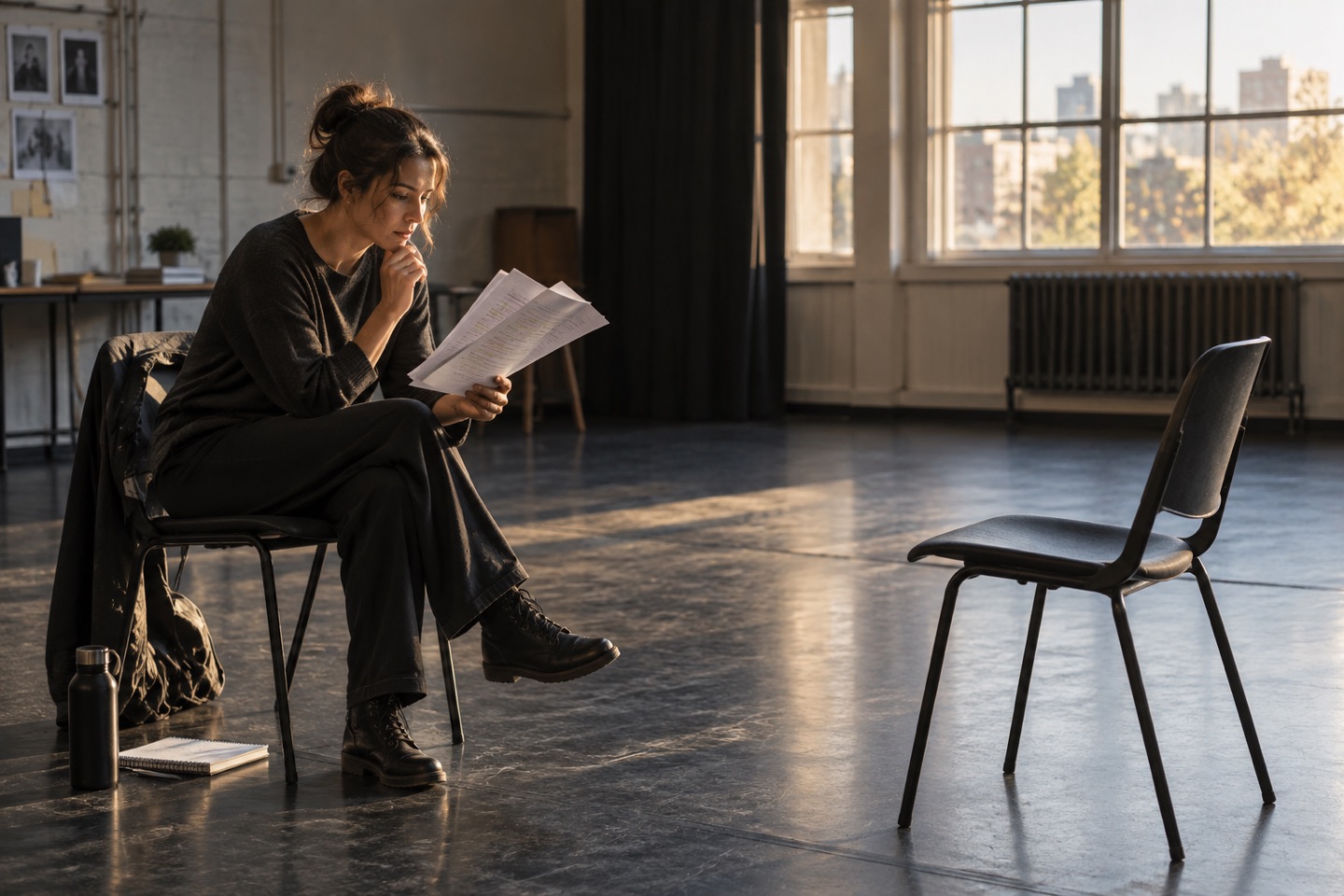
Confirm what has changed
Find out whether the rehearsal is cancelled or simply shorter. Agree what you can each prepare. If the absence affects the assignment, let the tutor know. Keep the message practical rather than trying to resolve frustration through rehearsal notes.
Check the edition, cuts and agreed start and finish. Working alone on the wrong pages creates work for both of you. Mark questions for the tutor instead of quietly making shared decisions yourself.
Prepare what belongs to you
Read the full scene. Separate what the text proves from ideas you would like to try. Learn your words and the cues that lead into them. Choose something you want from the other character: get them to stay, return a key or admit they heard you.
Leave the result open. You cannot rehearse their agreement while they are absent. A recorded cue or app can help with recall, but its timing is a stand-in, not a decision your partner has made.
A suggested forty-minute session
Use this as a working schedule, not a rule. If one stage exposes a real problem, spend your time there.
- Ten minutes: check facts, cuts and unanswered questions.
- Ten minutes: work from each difficult cue into your response.
- Ten minutes: try two ways of pursuing the same objective.
- Ten minutes: record a passage and write a short handover.
Keep the choice; leave the response open
Imagine an original classroom scene in which you need a flatmate to return a spare key. Try making the request sound routine. Then try explaining why you need it today. Neither choice requires you to decide that the flatmate is guilty or frightened.
Do not set shared movement or physical contact without your partner. At the next rehearsal, read together before adding blocking. Listen to their interpretation before trying to preserve the version that worked alone.
Send three useful sentences
Try: “I checked the cues on our agreed pages. I tried asking for the key casually, then explaining why I need it today. When we meet, can we test which gives you something clearer to respond to?”
That explains the work without assigning homework your partner never agreed to. Bring a specific question into class. Preparation should make collaboration easier, not become a defence of your solo version.
Keep working on the scene
These are suggested exercises, not fixed rules. Follow the brief, your tutor’s guidance or the production’s instructions where they differ.