You can rehearse lines alone effectively if another voice supplies the cues and you treat every cue as something to receive. The key is to stop alternating between both characters. Your task is to stay inside your role, listen, respond and let the scene affect you.
Why reading both roles is limited
Switching voices can teach sequence, but it interrupts your character’s thought and removes genuine listening. It also encourages you to anticipate the cue because you just said it. Use that method for an initial text check, then move to a separate reader voice.
Prepare the scene
- Read the complete scene and mark changes in subject, tactic or stakes.
- Underline the short phrase that triggers each of your lines.
- Choose one manageable beat rather than always starting at page one.
- Decide where the other character is in relation to you so your focus has a consistent place.
Try it with a short scene
If you haven't got a script to hand, download The Spare Key (two-page PDF). Alex is leaving; Sam wants to keep the conversation going. Choose one role and mark the moment when the other character changes your approach.
Save the PDF to Files, then import it into Action and check the detected roles and dialogue. The free plan includes one script and a basic rehearsal voice. Start with an accuracy pass, then repeat the scene with a different intention. The import guide includes the plain-text version and permission to use the scene in classes and recorded practice.
Three ways to supply the other lines
Record them yourself
Record every opposite line with enough silence for your response. This is quick and free, but fixed pauses can make you rush or wait unnaturally.
Ask someone for audio
A friend can record the cue lines once. Their voice feels separate from yours, although changing cuts or timing means making a new recording.
Use a scene partner app
A script rehearsal app can parse the dialogue and speak the other roles. A responsive app is preferable to fixed playback because it can leave room for your timing.
A four-pass solo rehearsal
- Accuracy pass: work slowly and check every word.
- Listening pass: take attention off your own result and receive the full cue.
- Pressure pass: run faster than feels comfortable to expose uncertain lines.
- Performance pass: restore natural pace, pursue the character’s objective and keep going through small mistakes.
Solo rehearsal in Action!
Give every cue a different voice
- Upload your PDF script.
- Open the scene and choose the character you are playing.
- Generate the rehearsal so Action! takes the remaining roles.
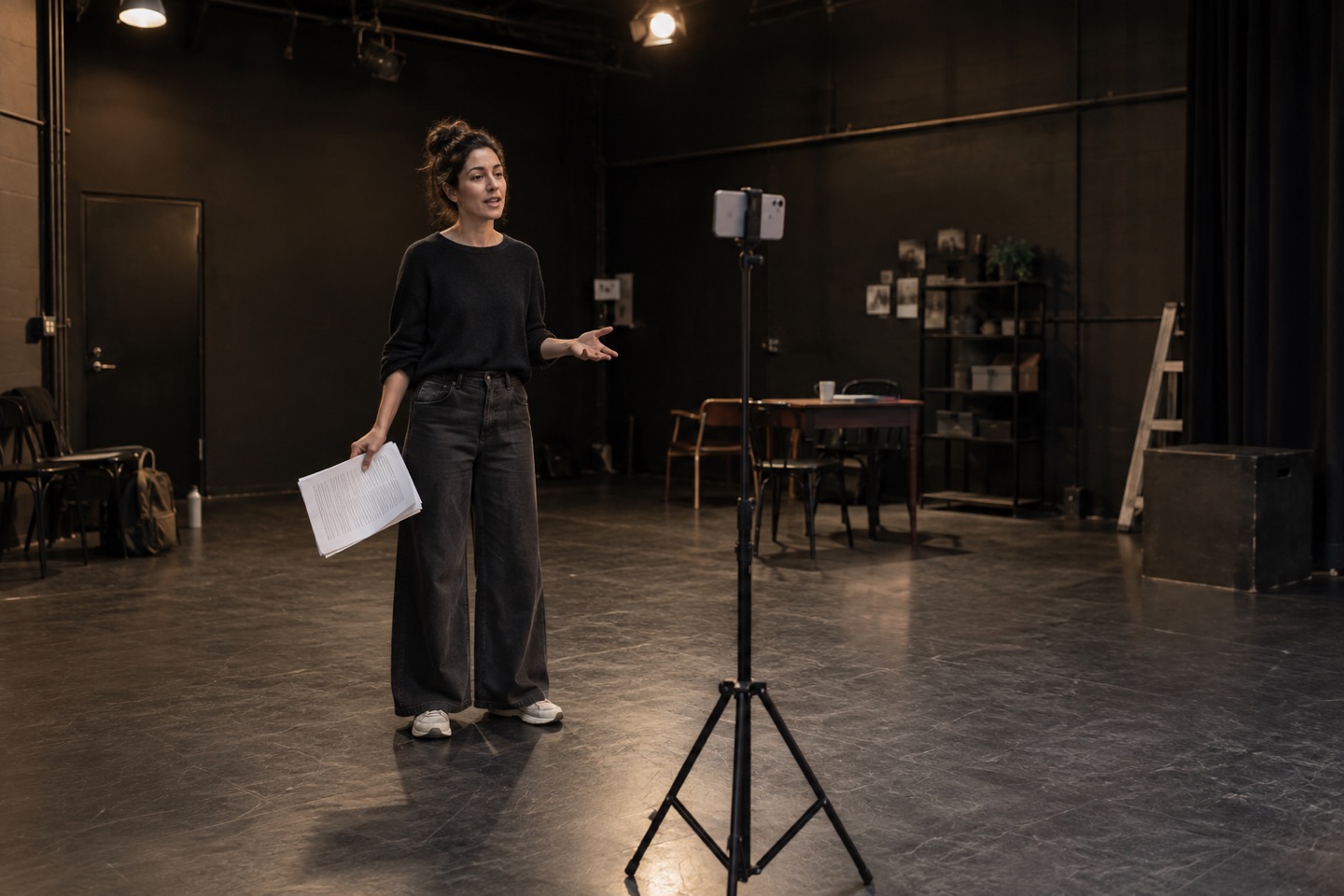
- Put the phone near your intended eyeline, press play and speak your lines aloud.
- Restart the scene and use the next run to change one thing: pace, focus or intention.
The other roles remain consistent while you stay free to explore your own performance.
Download Action for freeHow to know the rehearsal is working
You should be able to begin from the middle, recover after a missed word, listen through the end of the cue and take a new direction without losing the text. If you can only perform the scene from the first line in one rhythm, return to individual cue-response pairs.