Audition sides are short, but the preparation still needs context, clear action and repeated spoken practice. When you are working alone, separate the jobs: understand the scene, secure the text, then rehearse it with an outside reader voice.
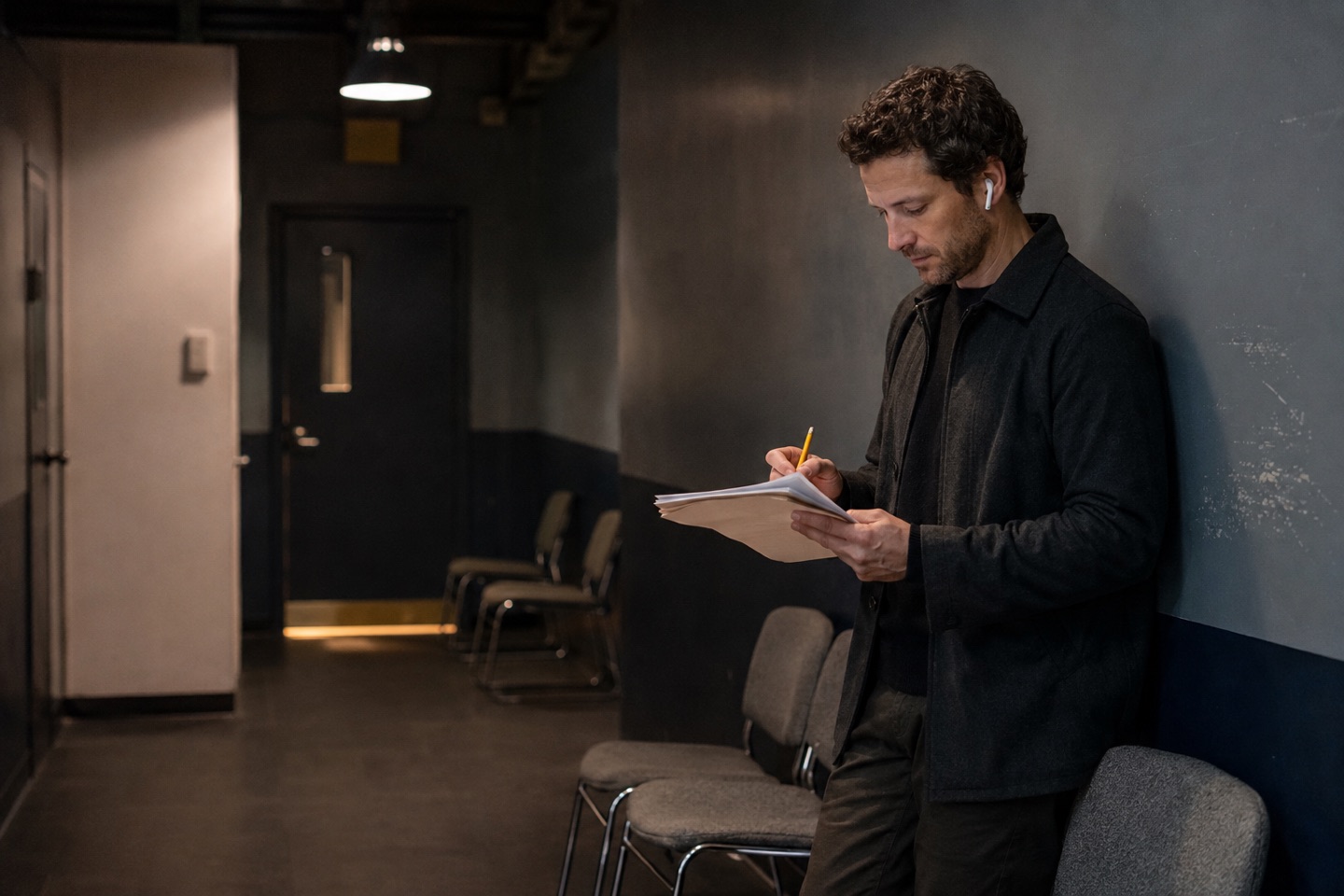
1. Start with the casting instructions
Before acting choices, check the deadline, framing, slate, accent, page cuts and whether the material may be held. Those instructions outrank general advice. Confirm which role and version of the sides you are performing.
2. Pull out the facts
Write down where the scene happens, what occurred immediately before it, the relationship and what changes by the end. Mark any fact the dialogue gives you. Avoid inventing a large backstory when the pages already supply playable pressure.
3. Find the objective and beats
State the immediate objective as an action toward the other person: persuade, stop, expose, reassure or provoke. Then mark where your tactic changes. Each beat becomes a manageable rehearsal unit and a possible place to begin after redirection.
4. Learn cues, not isolated speeches
Cover your line, hear or read the end of the opposite line and retrieve your response. Correct the exact wording immediately. Once the pair is secure, connect it to the next. This protects the listening process and makes recovery easier if a reader phrases the cue differently.
5. Do three purposeful runs
- Text run: accuracy and clean cue pickup.
- Action run: pursue the objective and let the other voice affect you.
- Adjustment run: change pace, tactic or level of restraint without changing the text.
Do not record dozens of nearly identical takes. Solve the preparation problem first, then record a small number of committed versions.
Audition sides in Action!
Import the PDF and hear the scene
- Save the correct audition-side PDF to Files.
- Import it into Action! and review the detected scene and roles.
- Choose the character you are auditioning for.
- Use the spoken rehearsal to learn cues and run each beat.
- Restart for a complete run, then repeat with one clear adjustment.
Because Action! handles the other roles, you can keep your eyes up and your attention on the exchange instead of reading both columns of dialogue.
Rehearse your audition sidesWhat if it is a cold read?
Do not spend the limited time forcing complete memorisation. Mark the beat changes, operative words and cue pickups. Hold the page where your eyes can return without hiding your face. Use the short preparation window to understand the scene’s turn and rehearse the opening and final moments cleanly.
A final readiness check
- You can state the objective without describing an emotion.
- You know what changes in each beat.
- You hear the cue before speaking.
- You can begin from at least two places in the scene.
- You can take one plausible adjustment without losing the lines.