The fastest reliable route off-book is not reading the page more times. It is repeatedly trying to retrieve a line from its cue, checking it, and then using it in the flow of the scene. Start with meaning, work in small beats and move to spoken rehearsal early.
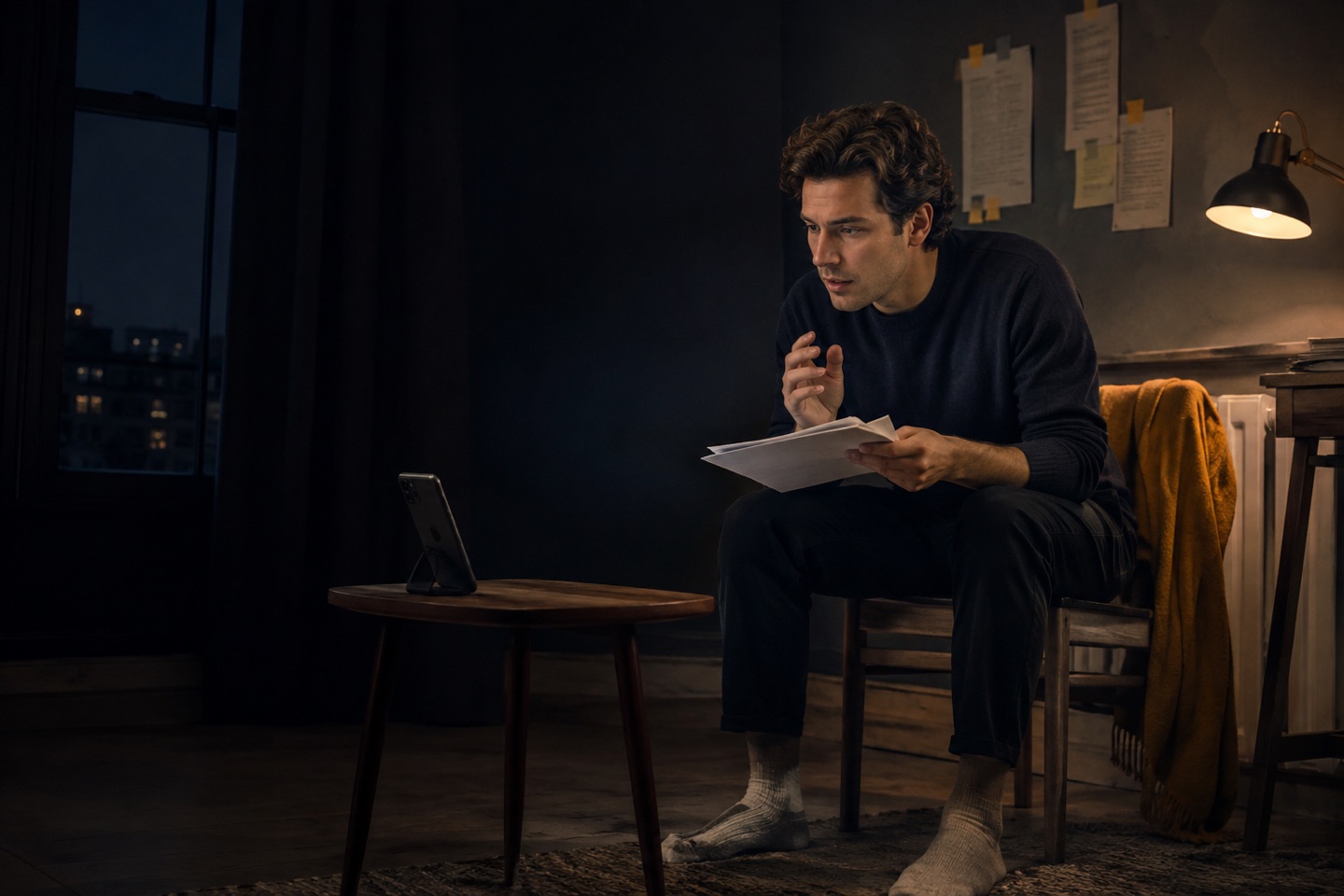
1. Understand before you memorise
Read the full scene without trying to retain it. Identify what your character wants, what changes and why each thought follows the last. A line with a clear purpose is easier to recover than a loose string of words.
Paraphrase each beat in your own words. If you cannot explain the thought simply, solve that before drilling the exact text.
2. Divide the scene into beats
Break long pages whenever the tactic, subject or emotional pressure changes. Learn one short section accurately, then join it to the next. This “chunking” reduces the amount your working memory has to hold at once.
3. Learn the cue with the line
Your line does not begin in a vacuum. Pair the final thought or phrase spoken by the other character with your response. Cover your line, read or hear the cue, say the answer from memory and check the page immediately. That is active recall.
4. Space the tests
Three focused ten-minute sessions usually create stronger recall than one tired half-hour. Revisit the section later the same day, once before sleep and again before looking at the page the next morning. Spend more time on the lines that fail, not the ones that already feel easy.
5. Get the words into your body
Stand up and say the scene out loud. Add simple movement that belongs to the action, but avoid choreographing every word. Spoken rehearsal reveals breath, awkward phrasing and weak transitions that silent reading hides.
6. Break the fixed delivery
Run the lines faster, slower, quietly or with a deliberately different intention. You are testing whether the words survive a new direction. If changing delivery destroys recall, return to the cue and the thought rather than repeating the old rhythm.
Use Action! for the spoken test
Turn the script into a live cue-recall drill
- Import the PDF and check the detected scene.
- Select your character so Action! takes the other roles.
- Run one beat at a time and answer the spoken cues without reading.
- Restart the scene, alter your pace or intention, and notice which lines still need work.
- Finish with a complete uninterrupted run.
Because the cue arrives in another voice, you practise listening and responding, not just reciting a memorised block.
Practise your lines with Action!Common mistakes that slow line learning
- Reading the page repeatedly without testing recall.
- Learning your speeches but not the cue lines that trigger them.
- Trying to perfect delivery while the words are still unstable.
- Practising only from the beginning and neglecting later sections.
- Doing one marathon session instead of returning after a break.